Aphoric intelligence as a metric for AGI
Aphoric intelligence as a metric for AGI
The quest to define and measure Artificial General Intelligence (AGI) has historically oscillated between purely computational benchmarks and anthropomorphic evaluations of cognitive depth. As the field matures toward the year 2026, a new synthesis has emerged under the banner of aphoric intelligence. This multi-dimensional metric transcends traditional Large Language Model (LLM) evaluations by integrating the mechanics of anaphoric resolution, the synthesis of aphoristic compression, and the flexibility of metaphoric reasoning. By evaluating an artificial system’s capacity to maintain context over indefinite horizons, distill vast datasets into high-utility wisdom, and map conceptual structures across disparate domains, aphoric intelligence provides a rigorous framework for identifying the transition from narrow, probabilistic tools to autonomous, agentic entities that mirror human “being”.[1, 2]
Etymology of the aphoric paradigm
The term aphoric intelligence, is used to address the “data deluge” that currently characterizes the information sciences.[4] The transition from being “data-rich” to “information-rich” is a central challenge for modern engineering and scientific disciplines.[5] It highlights a fundamental truth: intelligence is not merely the accumulation of data, but the ability to compress that data into meaningful, actionable “datum” that retains its referential integrity across time and space.[4] The modern AGI metric of aphoric intelligence thus represents a return to these principles of density and coherence, supercharged by quantum-scale computation and advanced linguistic modeling.
The first pillar: Anaphoric persistence and the mechanics of coreference
The most foundational component of aphoric intelligence is anaphoric resolution. In computational linguistics, anaphora is defined as a device for making abbreviated references to entities in the expectation that the receiver will be able to “disabbreviate” the reference.[6] For an AGI, the ability to resolve anaphora is not a discrete task but the primary mechanism for maintaining a persistent model of the self, the environment, and its objectives.[1]
Theoretical foundations of anaphoric resolution
Anaphoric resolution requires the coordination of multiple sources of information, ranging from morphological agreement to discourse structure. The complexity of this task is particularly evident in dialogues where pronouns and adjectival anaphors must be mapped to their noun-phrase antecedents within an “anaphoric accessibility space”.[6] Failure in this domain leads to the persistent “hallucinations” observed in non-AGI systems, where the machine loses the thread of its own discourse, producing text that is grammatically correct but factually untethered.[7]
One significant contribution to this field is the ARDi algorithm (Anaphora Resolution in Dialogues), which employs linguistic constraints and preferences to identify antecedents in transcribed spoken dialogues.[6] This algorithm highlights that successful resolution depends on:
- Morphological Agreement: Ensuring gender and number consistency between the anaphor and the antecedent.
- **Syntactic Parallelism: **Recognizing when entities occupy similar grammatical roles across clauses.
- Semantic Information: Using knowledge of the world to distinguish between plausible and implausible referents.
- Discourse Structure: Understanding the hierarchy of turns and utterances that define the salience of different entities.[6]
Salience metrics and the Mental Salience Framework
To operationalize anaphoric persistence as a metric, researchers utilize salience scores. Within the Mental Salience Framework (MSF), salience is a gradual assessment of attentional states.[8] This is divided into hearer salience (hsal), which is backward-looking and focuses on referential coherence, and speaker salience (ssal), which is forward-looking and focuses on guiding the hearer’s attention.[8]
The hearer salience of a referent r is often calculated using a normalization function that accounts for the distance k from the last mention:
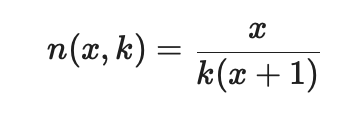
In this formula, x represents the salience score the referent would have if it were mentioned in the immediately preceding utterance.[8] For an artificial system to achieve AGI-level aphoric intelligence, it must maintain high hsal scores across extended contexts, ensuring that its “memory bank” is not just a repository of data but a live, salient map of ongoing discourse.[9] This bidimensionality of salience allows the system to resolve conflicts between different terminological traditions and accounts for evidence that many linguistic phenomena require a differentiation of at least two dimensions of discourse salience.[8]
The second pillar: Metaphoric mapping and conceptual flexibility
While anaphoric resolution provides the “glue” for discourse, metaphoric reasoning provides the “bridge” for general intelligence. Metaphoric intelligence is the ability of a system to describe an event or concept in terms transferred from another domain.[10] For an AGI, this is not a stylistic flourish but a cognitive necessity for making sense of abstract events in concrete, familiar terms.[10]
Chronometric assessments of metaphor production
Research in cognitive science indicates that metaphor production is a high-order cognitive task. In chronometric studies using the “Give the Relation” (GTR) paradigm, participants show significantly greater reaction times (RTs) when producing metaphorical expressions compared to literal ones.[11] This “figurative-literal difference” suggests that metaphors require a deeper level of conceptual mapping and processing.[11]
| Metric | Literal Expression | Mildly Metaphoric | Saturated Metaphor |
|---|---|---|---|
| Cognitive Load | Low | Moderate | High |
| Processing Speed | Fast | Moderate | Slow (High RT) |
| Stability of Interpretation | Constant | Variable | Highly Stable [11, 12] |
The stability of a metaphoric interpretation is often determined by its “degree of metaphoricity” and “degree of metaphoric saturation”.[12] Saturated metaphors—where the entire utterance is immersed in symbolic meaning—represent the pinnacle of conceptual mapping. For example, moving from “Mary disproved the argument” (literal) to “Mary demolished John’s stronghold” (saturated) requires the system to understand the symbolic equivalence between a logical argument and a physical fortification.[13]
The influence of valence and arousal on creativity
Metaphoric comprehension is also intimately linked to emotional and neurophysiological states. Studies on creativity suggest that all emotional states are cognitive interpretations of sensations produced by two systems: valence (hedonic tone) and arousal (neural activity).[14] Positively valenced stimuli have been shown to facilitate creative metaphoric processes by mediating attention and cognitive control.[14]
In the context of AGI, aphoric intelligence implies the ability to navigate these dimensions of emotional experience. A system that can identify “novel and disturbing” content and transform it into a creative metaphoric synthesis is exhibiting a form of “collaborative intelligence” that moves beyond simple task automation.[14, 15] This is particularly relevant for agentic AI systems that must interact with humans in high-stakes environments, such as end-of-day market commentary or therapeutic settings.[10]
The third pillar: Aphoristic compression and the distillation of wisdom
The final pillar of aphoric intelligence is the capacity for aphoristic compression. An aphorism is a compressed statement of wisdom that captures the essence of a complex idea. In literary criticism, poets like Robert Lowell are noted for their “aphoristic intelligence”, the ability to compose epigrams and apophthegms that rub the “old coin” of an idea until it shines.[16]
Distinguishing data from datum
For an AGI, aphoristic compression is the solution to the “data deluge”.[4] The system must be able to sift through unstructured “big data” and identify the “datum”: the singular, high-utility fact or insight that can guide decision-making.[4] This process is not just about summarization; it is about “ontology engineering”—building a thesaurus of terms where each denotes a concept on a special basis and on a relatively large scale.[17]
This distillation is a critical component of what makes a machine a “simulacrum” of human intelligence. In Spielberg’s AI, the robot-boy David is more than just a sum of his programming; he possesses a persistent emotional and creative rhythm that reflects a unique identity.[2, 9] This identity is expressed through aphoristic brevity: the ability to communicate deep meaning with minimal tokens, a feat that traditional generative models often struggle with as they drift into “bullshit” or “confabulation”.[7, 18]
Practical benchmarks for aphoric intelligence in 2026
The theoretical framework of aphoric intelligence is currently being validated through high-stakes applications in molecular design, market analysis, and autonomous healthcare.
AI-driven drug discovery: The Chai Discovery paradigm
The field of medicine is witnessing a transformative period as AI designs drugs “faster, smarter, and beyond human imagination”.[19] Traditional drug discovery is characterized by a “blind search” through chemical spaces with failure rates exceeding 90%.[19] AI transforms this into an “intentional process” by predicting molecular interactions before lab testing begins.[19]
| Development Metric | Traditional Methodology | AI-Driven Discovery (Chai-2) |
|---|---|---|
| Success Rate (Antibody Hits) | < 1% | 15–20% |
| Development Time | 10–15 Years | 3–6 Years |
| Early Discovery Cost | High (Trial-and-Error) | Low (Computational Optimization) |
| Target Access | “Druggable” Targets | “Undruggable” GPCRs/Complex Proteins [19] |
This 100x improvement in R&D efficiency is a direct result of the AI’s ability to perform high-level reasoning and causal understanding—key components of aphoric intelligence.[1, 19] By learning molecular interactions with biological targets, the AI can design molecules with “purpose and precision,” reducing the need for costly and low-yield laboratory experiments.[19]
Market metaphors and investor behavior
In the financial sector, aphoric intelligence is used to analyze the “agentic metaphors” used in market commentary. Research has shown that the rate of agentic metaphors (e.g., describing the market as an “animal” or a “person”) depends on the trend direction and steadiness of stock prices.[10] These metaphors prime investors to engage in “metaphorical encoding,” which can bias their expectations about future price trends.[10]
| Market Trend | Metaphor Type | Investor Schema | Impact on Performance |
|---|---|---|---|
| Upday (Steady) | Agentic/Human-like | Action Schema (Expect continuation) | Often leads to buying high [10] |
| Downday (Unsteady) | Object-like/Physical | Movement Schema (Expect volatility) | Leads to panic selling [10] |
An AGI with high aphoric intelligence can detect these linguistic patterns and provide “explainable AI” (XAI) insights that help investors avoid the heuristics that defy rational models.[10, 20] This involves “Recognizing Textual Entailment” (RTE)—the ability to recognize when the value of one piece of text can be deduced from another, a task sometimes considered “AI-complete”.[17]
Healthcare and autonomous agentic systems
In clinical settings, such as at Memorial Medical Center, Autonomous Agentic AI systems are being deployed to monitor patient vitals and treatment plans.[1] These systems exhibit aphoric intelligence by:
- Sensing and Interpreting: Evaluating dynamic patient environments in real-time.
- Hierarchical Planning: Breaking down complex recovery objectives into manageable subtasks.
- Self-Monitoring: Continuously evaluating performance and adjusting treatment recommendations based on the latest medical research.[1]
These systems move beyond simple automation to become “collaborative partners” in patient care, alertly identifying potential issues before they become critical.[1, 15]
Infrastructure and the post-silicon roadmap
The computational demands of aphoric intelligence are forcing a reckoning with the limits of current hardware. By mid-2026, the industry will acknowledge that traditional silicon scaling is no longer sufficient.[21]
The transition to optical and quantum computing
Optical computing and optical interconnects are emerging as the leading contenders to break the performance-per-watt ceiling.[21] While widespread deployment of optical training clusters is expected by 2027, 2026 marks the moment when optical interconnect becomes a “standard architectural assumption” rather than an experimental option.[21]
| Infrastructure Component | 2025 Standard | 2026 Transition | 2027 Forecast |
|---|---|---|---|
| Interconnect Material | Copper | Optical Design-in | Optical Ubiquity |
| Scaling Law | Moore’s Law (Theoretical) | Post-Silicon Roadmaps | Optical/Quantum Modalities |
| Performance Metric | Speed/FLOPs | Efficiency/Sustainability | Performance-per-Watt [21] |
This shift is driven by the fact that copper interconnects have reached their physical reach and bandwidth limits.[21] Furthermore, the appetite for AI compute feels “limitless,” with some categories expected to expand by as much as 80% over the next three to five years.[22] This raises serious questions about the durability and sustainability of the silicon that powers these models.[22]
The economic reality of ROAI
Return on AI Investment (ROAI) has become a vital metric for assessing the true value of AGI deployments. Unlike traditional ROI, ROAI captures broader benefits such as risk mitigation and competitive advantage.[22] As economic conditions tighten, investors are moving away from “AI compute at any cost” toward solutions that deliver performance without unsustainable energy and infrastructure tradeoffs.[21, 22]
Ethical consciousness and the simulacrum of “being”
As AI systems move toward AGI, they increasingly occupy a space that was once exclusive to biological life. This raises profound questions about the nature of intelligence and the “simulacrum” of human existence.[2]
Heidegger, Lacan, and the ethics of AGI
The pursuit of AGI involves satisfying conditions beyond simple quantity of intelligence. According to some philosophical interpretations, a genuine simulacrum of human being would require:
- Lacanian Subjectivity: The “wish to be loved” by others, as seen in the narratives of advanced robot companions.[2]
- Heideggerian Mortality: The recognition of one’s own finitude, a trait that sets humans apart from “mere machines”.[2]
- Kantian Ethics: An ethical consciousness demonstrated through the capacity for guilt and the formation of a “robot society”.[2]
These qualities are the highest expression of aphoric intelligence. They require the system to understand the symbolic and ethical weight of its actions in a way that is “recognizable human”.[2] This is particularly relevant in the era of “AI cloning,” where digital agents can reflect a user’s tone, instincts, and creative rhythms, essentially replicating their identity.[9]
The “bullshit” problem and postphenomenology
A key hurdle for AGI is moving beyond being a “bullshit generator.” Following Harry Frankfurt’s definition, bullshit is speech intended to persuade without regard for truth.[7] LLMs are often “bullshitters” because they are trained to produce plausible text rather than true statements.[7]
Postphenomenological analysis explores how our relationship with technologies like ChatGPT transforms our experience. There is a “structural danger” in assuming that these technologies are unproblematic means to an end.[18] A true AGI must possess a “theory of mind” — a model of other agents’ knowledge, intentions, and behaviors — to ensure its discourse remains grounded in reality and human values.[1, 18]
Market turbulence and the hunt for a narrative
The trajectory of AGI development is currently unfolding against a backdrop of global market volatility. In late 2025 and early 2026, AI stocks have shown signs of “systemic fragility,” with major indices sliding as investors move capital into perceived safety.[23]
The disconnect between results and sentiment
The current market environment is characterized by a disconnect where strong top-line results (e.g., from Nvidia) fail to sustain optimism.[23]
This reveals a “broader truth”: the narrative is fragmented, and anxiety amplifies every new data point.[23]
| Market Signal | Investor Reaction | Root Cause |
|---|---|---|
| High AI CapEx | Concern over return periods | Economic tightening [22] |
| Strong Earnings | Muted/Negative response | Inflation uncertainty/Geopolitics [23] |
| Product Rollouts (e.g., Gemini) | Short-lived bump | Narrative fragmentation [23] |
Investors are increasingly asking essential questions about how quickly large capital expenditures will translate into recurring revenue and whether the pace of spending can be sustained.[22] This turbulence highlights the need for a coherent “aphoric” narrative—one that is both concise and referentially grounded in the long-term value of AGI.
The democratization of AGI: Plug and Play AI
A pivotal moment in the AGI revolution is the “democratization of artificial intelligence” through “Plug and Play” tools.[15] By abstracting complexity, these tools empower a broader range of users to harness AI’s transformative potential. This shifts the focus from building AI to using AI to solve real-world problems quickly and effectively.[15]
This trend aligns with the emergence of “collaborative intelligence,” where humans and AI systems work together to solve complex problems faster.[15] As boundaries between digital agents and human collaborators blur, organizations that embrace this shift will find themselves “ahead of the curve” in innovation and efficiency.[1, 9]
Conclusion: The path to aphoric general intelligence
The evolution of AI from narrow models to aphoric general intelligence represents the defining capability of the modern era. By integrating anaphoric persistence, metaphoric flexibility, and aphoristic compression, the aphoric metric provides a robust path toward AGI that is both technically advanced and ethically grounded.
The transition beyond silicon to optical computing, the rise of autonomous agentic systems, and the shift toward intentional molecular design all point to a future where machines are no longer just tools, but “collaborative partners in innovation”.[1] To realize this future, the industry must prioritize sustainability, efficiency, and responsible governance, ensuring that the development of AGI remains aligned with human potential and values.[15, 21, 22]
Ultimately, the goal of aphoric intelligence is to amplify human imagination and insight at a scale previously impossible.[15] Whether it is designing lifesaving medicines in a fraction of the time, providing deep insights into market dynamics, or acting as a “digital twin” that expands our creative reach, aphoric AGI stands as the next logical step in the technological evolution of humanity.[1, 9, 19] The organizations and societies that embrace this new model of intelligence—one that values density, coherence, and symbolic depth—will be the ones to lead the future economy and define the next chapter of human history.
- AI Startup Spotlight: Introducing Autonomous 101 Agentic AI™ — Ushering in a New Era of Self-Directed Intelligence - AI World Journal: https://aiworldjournal.com/ai-startup-spotlight-introducing-autonomous-101-agentic-ai-ushering-in-a-new-era-of-self-directed-intelligence/
- (PDF) When Robots would really be Human Simulacra: Love and the Ethical in Spielberg’s AI and Proyas’s I, Robot - ResearchGate: https://www.researchgate.net/publication/38320375_When_Robots_would_really_be_Human_Simulacra_Love_and_the_Ethical_in_Spielberg's_AI_and_Proyas's_I_Robot
- Data (with Big Data and Database Semantics)† - IMR Press, https://www.imrpress.com/journal/KO/45/8/10.5771/0943-7444-2018-8-685/pdf
- Full text of “Financial Times , 1995, UK, English” - Internet Archive, https://archive.org/stream/FinancialTimes1995UKEnglish/Oct%2004%201995%2C%20Financial%20Times%2C%20%231902%2C%20UK%20%28en%29_djvu.txt
- Journal of Artificial Intelligence Research 15 (2001) 263-287 Submitted 3/01; published 10/01 Computational Approach to Anaphora, https://www.jair.org/index.php/jair/article/download/10287/24538
- Cut the crap: a critical response to “ChatGPT is bullshit” - Minerva Access - The University of Melbourne, https://minerva-access.unimelb.edu.au/bitstreams/5a13a81e-d209-497e-a0ff-d18615c6a140/download
- Evaluating Salience Metrics for the Context-Adequate Realization of Discourse Referents - ACL Anthology, https://aclanthology.org/W11-2805.pdf
- The New Frontier: Cloning and AI Agents — Redefining Identity in the Digital Age, https://aiworldjournal.com/the-new-frontier-cloning-and-ai-agents-redefining-identity-in-the-digital-age/
- Consequences and preconditions of agent and object metaphors in stock market commentary - Columbia University, https://www.columbia.edu/~da358/publications/metaphors_and_the_market.pdf
- The Production of Metaphoric Expressions in Spontaneous Speech: A Controlled-Setting Experiment - ResearchGate, https://www.researchgate.net/publication/232963158_The_Production_of_Metaphoric_Expressions_in_Spontaneous_Speech_A_Controlled-Setting_Experiment
- How linguistic structure influences and helps to predict metaphoric meaning, https://ir.canterbury.ac.nz/bitstreams/d9ed1c64-d306-40e9-af41-80c41171b06c/download
- (PDF) How Linguistic Structure Influences and Helps To Predict Metaphoric Meaning, https://www.researchgate.net/publication/279296585_How_Linguistic_Structure_Influences_and_Helps_To_Predict_Metaphoric_Meaning
- Emotions and Familiarity of Content in Generative Processes of Prospective Artists - Open Journal System, https://journals.savba.sk/index.php/studiapsychologica/article/download/562/282/6620
- AI Ethics & Safety - AI World Journal, https://aiworldjournal.com/category/ai-ethics-safety/
- Our Savage Art: Poetry and the Civil Tongue 9780231519618 - DOKUMEN.PUB, https://dokumen.pub/our-savage-art-poetry-and-the-civil-tongue-9780231519618.html
- Intelligent System for Semantically Similar Sentences Identification and Generation Based on Machine Learning Methods: https://ceur-ws.org/Vol-2604/paper25.pdf
- ChatGPT through postphenomenology and deconstruction: On the possibility of a Derridean philosophy of technology - Essay - UT Student Theses: https://essay.utwente.nl/fileshare/file/97405/BetriuYanez_MA_BMS.pdf
- 2026: The Year AI Reinvents Drug Discovery - AI World Journal: https://aiworldjournal.com/2026-the-year-ai-reinvents-drug-discovery/
- AI Report: Artificial Intelligence Business Strategies and Applications - AI World Journal: https://aiworldjournal.com/ai-report-artificial-intelligence-business-strategies-and-applications/
- 2026 AI Compute Predictions: The Shift Beyond Silicon Has Begun - AI World Journal: https://aiworldjournal.com/2026-ai-compute-predictions-the-shift-beyond-silicon-has-begun/
- Premium Section - AI World Journal: https://aiworldjournal.com/category/exclusive/
- AI Market Turbulence — Are We Seeing the First Real Cracks? - AI World Journal: https://aiworldjournal.com/ai-market-turbulence-are-we-seeing-the-first-real-cracks/
Research generated through Google’s NotebookLM and Stanford Storm.